Showing posts with label lessons learned. Show all posts

Saturday, January 10, 2015

Lessons about Life's Blind Spots

I attended a forum today at the local university. I will be honest, while it applies loosely to my educational training, the real reason for leaving the house this morning was not the topic of the forum. It was simply to get out of the house. The world of isolation and the cold of winter are both getting me down. That said, I am glad I went. The forum's topic was issues of the global church and, more broadly, issues of cross-cultural understanding. In short, we need each other. We need the perspectives that can be gained only through community.

As I listened, I knew two things:
1. These presenters had known the rawness of life. They have learned to walk when things are difficult and the weight seems too burdensome to bear.

While that is not surprising, I discovered that, because of our time in the NICU, I could relate to their stories in a new way. I learned these lessons in the NICU and they learned these lessons across the globe, but the way we responded -- the way God led us when things were bleakest and we had no more of our own strength -- were so similar. Their experiences resonated with one another, and with mine. I was nourished.

2. Jonathan's life can speak to our understanding of the world around us. Particularly, his vision helps me understand my own vision. So, in the "Lessons Learned through a Micro-Preemie" spirit of this blog, as I listened, I penned these thoughts.

As you, the blog reader, know, when my son was just a few months old, he was diagnosed with the worst form of retinopathy of prematurity, called Rush ROP, or Aggressive Posterior Retinopathy of Prematurity.  The vessels in his eyes were not growing correctly, and left untreated, his retina would become detached and he would become blind. The surgery to preserve his central vision would come with a cost, though. The scars the lasers left would limit or eliminate his periphery vision.

As you also know, the surgery worked. While he wears glasses, his central vision is preserved and (with the glasses) he can see even the smallest bead clearly.

At the last appointment with his eye doctor, I asked when Jonathan would be able to tell us what he couldn't see, so we could know how bad his tunnel vision was.

The doctor turned his head slightly and paused. "He will never be able to tell you what he cannot see," he said.

He further explained, "He will not see blind spots. He will not think he has tunnel vision. His brain will fill in everything." From memory or conjecture, my son's brain would make up for his visual failings, so things would always look normal to him.  Nothing is blocked out.

As I listened to the speakers at today's forum discuss our understanding of our world, it occurred to me -- we all have my son's vision. We all anchor our beings by focusing on things that make sense to us. We limit our own vision to bring greater focus to the world around us. It makes sense, but we must be aware that these blind spots exist. We will not see them as blank areas, because our brains will fill in those spots as best as possible.

This is why we should turn our heads from time to time and focus elsewhere. The blind spots must be acknowledged and questioned, even if we don't feel those spots exist.

Prior to getting his glasses, Jonathan spent a lot of time looking at his hands. It was the only bit of his world that he could see clearly. I wonder what we can do to think more broadly, to look beyond ourselves, to earn a new perspective.  I wonder how many of us, given the chance, would aim for that perspective. If we're going to be honest, we'll admit that it is easier and less painful to fill in the blind spots in our head than to turn that head and seek new clarity.

These are today's lessons learned from my micropreemie, and today's challenge.

Sunday, February 2, 2014

Remembering the day he nursed.

Q: When was your micro-preemie able to nurse?
A: At six months old (two months adjusted age). Exactly a year ago today. Once.

I remember being hooked up to the breast pump in the NICU and at home many times a day. I added up the time once, and between pumping, storing, thawing, feeding, and cleaning pumping supplies (we don't have a dishwasher) I spent between 8 and 12 hours a day feeding my son. Thankfully I didn't do it alone, as Steve helped with cleaning and feeding parts of the job. Ella believed she could help with feeding, too, but the closest she ever got was us letting her hold the bolus once or twice when a feeding was gavaged (put through his feeding tube with gravity taking it to his stomach).

I remember my NICU nurse being surprised when I was still exclusively pumping food for JAM at four months. Jonathan had only ever had my milk, often with fortifier added for extra calories. "Not many stick with it that long" she said.  I didn't know it then, but I'd be sticking with it for another year.

It had been easier going for me than for many NICU parents. I had been in preterm labor twice in the three weeks before his delivery, and my body was ready for him. It was difficult to sit up and pump after a c-section, but it had come with rewards. After five minutes, I had a few drops of liquid gold - colostrum for my son. Within two days my milk had come in. I was fortunate.

I told the nurse that I was investing so that things would be easier later on. If I could keep producing milk, eventually I'd be able to be bottle and apparatus free -- with just me and Jonathan all that was required for a meal. That's how it had been for my girls. I would grab a few diapers and wipes, and we could go out on the town together. No worrying about if I had enough food on hand, I always had food.

And so that's how it was going to be with my micro-preemie, I was sure. Eventually he'd learn to eat by mouth, and when that day came, I wanted to be ready. Nursing my kids was always a special bonding moment, and I'd missed so many other moments with JAM, this is one I was going to work for.

In the NICU we tried with nipple shields - thin plastic that helps keep the suction in place so that babies with a weak suck can still get food - and Jonathan was able to get a little milk. Most of the time he only got two to three mls of food, but once he got over 10 mls. We were delighted.

When we came home they told us he wouldn't be on a feeding tube long, that he had a strong suck and just needed to learn how to take a bottle.

We worked with him every day to get that feeding tube out. I had too fast of a flow for him, so unless he was doing very well with his breathing, we stuck to bottles most days.

A year ago Steve was slow in warming the bottle and Jonathan was very hungry. So I gave my baby another shot at nursing.  By the time Steve came in with the bottle, Jonathan had the hang of things, and so Steve took the bottle back with him and Jonathan kept nursing. It was beautiful. I found myself holding my breath in awe. He was really doing it.

About twenty minutes later Jonathan was in a milk coma. He had fallen sound asleep, warm and relaxed in my arms. It's a different sleep from other sorts of baby sleep. If you've seen this in a newborn, you know what I am talking about. His mouth still moved as if he were nursing in his dreams, but the rest of his body was heavy and relaxed. He was full, satisfied and safe.  My heart was full, too, completely in love with this little boy who had finally done what I'd dreamed for six months he might do. I was so glad I'd not stopped pumping. I was sure this moment was a sign of all the good things that were around the corner.

---------------------

It wasn't.

That was the only time he nursed for a full meal. After that he became too tachypnic (fast breathing) to eat even by bottle. We found ourselves only able to feed him by mouth once or twice a day on good days.

Within a few months we were meeting with a surgeon to talk about placing a more permanent feeding tube. When we finally got steroids on board for his lungs, he started breathing better again, but it would be another four to five months before he master a bottle. He never wanted to nurse again.

---------------------

By the time I figured out that things wouldn't be the way I'd dreamed, I'd gotten used to our new routine. I continued to pump until just a few months ago, when I lost five pounds in a week and my body decided I was done feeding the baby. He was over a year adjusted, or over sixteen months old.

Thus for over a year, close to a year and a half, JAM got antibodies from my milk. I gained a new respect for pumping mothers.

And through this I gained several more
Lessons Learned through a Micro-Preemie:
(You know, the name of this blog?)

1. Things will not always go as planned.
2. A micro-preemie's timing is his own, and setting schedules is silly.
3. Having your eye on the future is good, but hold on to those dreams loosely. Things change in unexpected ways, and once you've adjusted, you may find it's not so bad after all.

I also gained a deep freezer full of milk. See?

Don't be jealous - JAM was "NPO" too much of the
first four months of life - also not what we wanted.


Tuesday, January 28, 2014

The Runner

If you know me, then you will not be surprised that on an early autumn day a year and a half ago, healing from a c-section scar, I noticed a runner and at first I mourned.

I'm not particularly fit, but I love running. It is a banya for my soul. Each step, each mile has me beating my soles like birch twigs in a sweat house. I am cleansed as toxins housed deep in my heart and head are brought forth and released through tiny pores, flushed down the drain by a refreshing post-run shower. My heart rate regulates, my temper calms, and I can be more the person I wanted to be.

Once I could do it, running became a part of my self-prescribed therapy and a reference point for how far I'd come after being thrust into the life of difficult-to-digest emotions, the life of parenting a severely premature baby.

So look back with me, will you? See a glimpse of the runner that I saw as I drove into the NICU that warm September day. The story has been posted in two parts.
Part one
Part two

In the end the moment reminded me that even when you feel you're treading an unknown and lonely path, often there are footprints of those that went before you, if you take a second glance.

-------------------------------
The full story can be found on differentdream.com. A warm thank you Jolene and the rest of the crew at differentdream.com for wanting to include my story on their blog for parents of special needs children.


Tuesday, October 8, 2013

The Philosophy of Trees -- Retinopathy of Prematurity and Perception

I don't remember much about my undergraduate philosophy course, but I remember that my instructor had been dreadful.  He had assigned a half a dozen books, and I had been excited for the class. I loved philosophy. I loved thinking about what was real or false or concepts of how the world worked.

My classmates didn't feel the same way. They were taking the class because they had to. And they quickly discovered that our instructor was very easily brought along with them on unnecessary tangents. And tangents meant less material to learn and less would be on the test, because our instructor did not live by his own syllabus.

So we started with Rene Descarte's Meditations. A good place to start. And it was the only book we really read.  By the second or third meditation, our class had discovered the aforementioned secret, and they were all about continuing class discussions on topics long after they were dead.

Don't have a picture to illustrate this, so here's a picture
of JAM with a famous philosopher.

Bonus points if you can recognize the philosopher.
(Don't worry, not the philosopher who taught me.)
And so we spent somewhere between three and five class periods -- that's OVER A WEEK -- on whether the color I see as red is the same as the color you see as red, or if what I see as red you would perceive as green or blue or purple.

It was dumb.

I would not be majoring in philosophy.

But a year ago I decided I knew the answer to this ridiculous question from a decade earlier.

Yes. Yes. The color orange you see is different from the color orange I see. I know this, because the color orange I see is different from the color orange I see. At least, it was that afternoon. I was driving home from the NICU. The trees had all turned into a fantastic display of reds, oranges, greens and deep purples and browns. The landscape was a fireworks display. And the display had gotten brighter.  It wasn't because things were sunny.  On the contrary, things were back to uncertain. But these colors -- they were so alive. More alive because I was noticing them. I didn't take sight for granted any more. I wondered if my son would ever be able to indulge in the autumnal feast of colors.

Jonathan a year ago, recovering from eye surgery.
My perception of the world had changed.  And it wasn't just the leaves on the trees.  When the leaves fell off, the very trunks of the trees became not wood, but living vessels.  Some were ROP trees, like the thick gnarly wood of crab apple and oak trees.  Others, like the tall slender lines of the elm trees or the young maple tree, represented the vessels in the eye of normal babies, full term babies.  Those trees knew how to grow into the sky.  They grew straight, with many new twigs coming off each branch. The apple trees tried hard but couldn't find the right path. I pictured them pulling the weight of the earth up with them, detaching themselves because they couldn't grow, couldn't push to the sun.  They'd never be able to see.  You could tell by the lower branches. Dead, if not trimmed. Dying because they saw only shade.

Jonathan was now post-op from his eye surgery. The surgeon had said he'd done a very thorough job, zapping as much of the protein in the sky of Jonathan's eyes so that the branches of the vessels could grow tall and healthy, filling his eye and keeping his retina firmly planted at the base of it all.  They'd be dilating his eyes at least two times a week for a few weeks to see how those vessels grew, to look out for stage four or five of ROP+.

I walked across our beautifully wooded campus at work. I again admired the bright colors of the leaves. Maple leaves are my favorite. But I also loved the leaves that turned a deep purple. My foot crunched on a dried brown oak leaf, and I smiled. This. This was a gift. The trees don't just flame, they crunch.

My son may never see a burning bush. He may never see a hill side dotted with reds and greens and yellows and browns as an entire forest erupts into a symphony of color.

But he will crunch. He will feel the leaf under foot or in his hand. And he will wave that hand and crunch those leaves, and maybe even toss them into his sister's hair.  He's going to live now, you see. I was becoming more and more sure of it. And if he lived, he was going to live a GOOD life. I would see to it.  It would be colorful, even if he would not see color.

The first eye exam post-op was neither positive nor negative. The ROP had not reversed. But it hadn't gotten worse either.  We kept waiting.

--------------------------------------------

Spoiler alert.

This picture was taken a few weeks ago.  Today Jonathan can both see the splendor and feel the crunch of the leaves. He's nearsighted and he has limited peripheral vision from the scarring of laser eye surgery, but his central vision was preserved.

Monday, August 12, 2013

Week 3 & 55 of life: Two bridges - the difference a year can make

A year can make a huge difference.
A year ago, still healing, I struggled to walk up this bridge to the NICU


This weekend I ran this bridge.
(Click and check the top of the tree line on the horizon if you can't see it.)


This is what I earned this year - a metal around my neck.

This is what I earned last year - a child next to my heart.
First time holding my son, at three weeks and two days old.


This is how we did kangaroo care.
A blanket and my heat kept him warm.
Two nurses helped get him on my shoulder so that
he would be safe and not too much disturbed.
We worried that he'd get too cold.


Gratefully, I've held him many times since.
Here are me and he, exactly a year later.


We don't even call this kangaroo care any more.
I'm just holding my baby.
The sun keeps him warm, sometimes too warm,
And I can pick him up whenever I want to.


A year ago when I was done,
we (at least one nurse and me)
would snuggle him back into his isolette.
He had a very hairy blonde back.
He had brown silky hair.


Now when I'm done,
I pass him to an uncle.
He stands and chats at us. Or yells about the weather.
He has a very hairy blonde head.
His uncle has the brown spiky hair.

We sit and stare at my favorite river.I think about the race we ran.
"See little buddy?" I whisper to JAM,
"I told you it would get better."


Scars - they fade.

Remaining only as pillars, reminders
of our struggles
and of God's faithfulness.

Pain - it disappears.

Except for on those days
when the weather changes
and the ache reminds you of what you've lost
A lot. A lot was removed.


But
A year ago, a year
was all the further ahead I dared to dream.

The most important bridge was a half a block long.
Now the bridge is longer.
We see farther.
A year - can make a difference.


Friday, July 26, 2013

Surrounded. A bit of grace in difficult times.

You know what the most redemptive thing about last year was?  The feeling of being surrounded.

When we had our second child, we had just moved into town. A friend moved with us -- her husband (also a good friend) had gotten a job at the same place as Steve -- so we weren't entirely alone, but I felt isolated.

After our move and after Mimi's traumatic birth five years ago, we all got the sickest we've ever been. Almost as soon as I recovered from my c-section, Ella got the first of what would be four ear infections -- all in one winter.  We finally got tubes in both ears. Steve had five bouts of pneumonia (no, not just bronchitis -- full blown pneumonia) and I had strep so many times that I ended the season in April with a tonsillectomy.  Only Mimi seemed unscathed, although she too got her fair share of sniffles that winter.  I joked with Steve that if he didn't shape up, they'd talk about removing his lung. Ella, after all, had had surgery, and so had I.  He came back from his pulmonologist and said I wasn't as far off as I'd guessed.  It never came to that, but things were bad.  (Martie, I know you want me to fit in the story about the fan blade and garage door here - but I can't. Not only would the story take too long, but that would be me airing my lowest-of-low moments from that winter, and I'm not sure the world is really ready for that.)

We found a church home about three months in, but we were still so new. I spent a lot of Sundays crying to songs in the pew because (a) I felt alone and (b) I was alone, because Steve was at home battling another round of pneumonia. At one point I was so embarrassed by my lack of spouse, snotty nosed kid, and tendency toward tears that I purposefully went to a different church so that I wouldn't have to answer questions again. Well meaning people who were virtual strangers knew that my husband wasn't there, and I didn't have the energy to look like I was alright with it.

I wanted friends, and I wanted folks to surround me and celebrate with me the new life that was my little Mimi. I wanted folks who knew us, and knew that this life of illness we were living wasn't normal for us. We weren't making this up. We had left a terrifically supportive community in North Carolina, and I feared I'd never get community like that again. We broke hospital visitation rules with the number of people that came to celebrate Ella's birth.  After Mimi's birth it was just me, Steve, and then eventually Ella and my mom who had driven in to town. And our two friends who'd moved with us. And a few parents of friends we'd had in North Carolina, but they didn't want to intrude, and we barely knew them.

I cried when the hospital staff presented me with a hand-made hat for Mimi, a donation to the the hospital. To me it signified that someone cared. Someone, a stranger, was glad that this new life was here, and wanted us to feel special.

==========
I had naively decided that this third child would redeem that horrid year. I wouldn't feel alone this time, I wouldn't have a traumatic birth. This is part of why I wanted so badly to deliver VBAC. We'd finally gone through one or two winters without getting sick, so things would be better. I had friends and community now, so I wouldn't feel alone with this baby.

A year ago I was telling this all to Cindy, the stranger-become-friend who was on bedrest down the hall from me and delivered her micro-preemie less than a week later. She is a woman of God and an inspiration. I was having horrid hospital coffee with her in the family room of the NICU.  "I wanted this birth to redeem all that" I said, "but I didn't have that easy third birth that I wanted. It was even more traumatic than Mimi's birth. But at least this time we're not alone.  We have so much support, so many people praying for and remembering this little guy."

"That experience has been redeemed" she said.

And as I thought about it, she was right. We didn't get the easy birth we'd wished for, but we were surrounded in ways we'd never experienced. You'll see that throughout this blog. Our friends hurt with us, and upheld us, and prayed for us, and spontaneously sent us gifts. We were worn, thread-bare, but we were not alone.

We learned much about community, and about the Christian community to which we belonged. We learned what it was to sit with someone who was hurting. I had known that sitting with a hurting person was never comfortable, I always felt so awkward, like I stumbled over all the wrong word all the time. Like I didn't care enough or I cared too much. Like I could never get it quite right.

I learned from being that hurting person that all that didn't matter. The fact that the friends were there, the fact that they cared, that is what mattered more than the words or fumbles (or, heaven forbid, inappropriately placed spiritual incantations).  I would take 1,000 foot-in-mouth comments, because the fact the wrong thing was being said meant that there was someone saying it. This time we weren't alone.

I don't state this to say this is why he came so early. This is not tragedy making up for hard times. But it is a bit of grace in the hard times.  And it was a lesson in how to love and be loved in hard times. Those lessons are important.

If you have friends who are preemie parents or parents of kids with cancer or just going through a hard time -- they can't be loved on enough. They will have nothing to give, they may not even have energy or time to spend with you, but do not forget them. It is a long road, and they need every ounce of support you can give. Just be sure your support comes with forgiveness when we don't send you the thank you card or don't have the energy to show just how much it means to us. Trust me, it means the world. You touched us, even if we're too worn to show it.

Thursday, July 25, 2013

Day 8 - Of babies, plants, and Ph levels: growing in hard conditions

When we bought our first house (our only house), we bought it for the spacious back yard. It was February. The house we were renting had had a patch of raspberries in the back yard, and fertile soil all around.  But the yard was small. We figured we'd have the same good soil at our new house only a few miles away, and lots more of it. After all, the land it was on had been farm country not too many decades before.

Except that they'd sold off the top soil.  We discovered this in May when we went to plant. We lived on clay.  A nice large lot of clay.

So I've spent the last four and a half years amending that clay. We built a raised bed and added soil. We invested in a composter and have slowly turned our kitchen scraps into more soil.  We have bought hardy plants like raspberry bushes and mint that will grow anywhere. We've learned to make it work.

And we've made some mistakes.

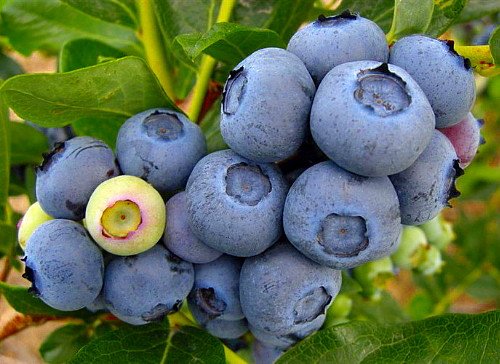
Like me mistakenly thinking that blueberry bushes would be very nice along the side of the house, they'd give such a nice red foliage in the fall and berries in the spring.

Foliage, yes, but berries, no. Blueberries don't like clay.  I'd known that much and dug them a pit of peat moss. They also like acidic soil. You know, like the kind of soil you'd get in a pine forest. Not the alkaline soil that surrounds a house due to the lime in the foundation.

After two years of amending the soil in the bed by the house to make it more acidic and less alkaline, but with no berries to show for it, my daughters and I decided to do a science experiment and see how acidic the soil was.

The answer: not at all acidic. The measures we'd taken hadn't lowered the alkaline levels at all.

So we made a new trench of peat moss in the back yard, under where a pine tree had been just a few years before. We replanted the blueberries. The first year after the replanting we had a few handful of berries to show. This year the rabbits thought it would be helpful to trim the bushes for us over the winter, so we have no berries to show. But the plants (even with the trimming) are healthier. And next year, I am hopeful that we'll finally bring in a crop of berries.

~~~~~~~~~~~~~~~~~~~~~~
Hang in there buddy! J at 8 days old.
About a year ago I learned we have Ph levels too. And Jonathan's were off. In the NICU they'd test the levels in his blood.  They then design his total perenteral nutrition (TPN) to help keep the levels where they wanted them. TPN was like Jonathan's IV version of Gatorade. And without it, he wouldn't have grown.

The girls and I had had a little tablet, soil, and a small vial to test the soil. I don't know how they tested his blood, but the results were the same: the conditions weren't great for growing, so we needed to find a way to help improve growing conditions.

And for both my berries and my bitty baby -- it has taken time. Longer than if they'd started out in an ideal environment.

But both have proven to be hardy.

I guess we are more like plants than I thought. I am amazed by modern medicine. I am amazed by science.

=====================
July 2013 -- a year later

Ella is my 6 year old. She coped with the insanity of last year by educating herself. She used all available resources to figure out as much as she could about Jonathan's life and care.

The result was one sturdy six year old who is terribly interested in medicine and science.

We saw a "Squishy Human Body" at a specialty store last weekend. That got Ella and her twelve year old cousin to talking. Ella wanted that squishy human body SOOO bad, so that she could learn all about anatomy and practice doing surgery. Bec thought it was a disgusting proposition. "Ewww" she said.

"What?" Ella replied, "It's just blood! Everybody has blood. Some people think it's disgusting, but we need it to live, so I don't think there's anything wrong with it. It doesn't bother me!"

Today she asked if she could watch a YouTube video with me on how to change his feeding tube. I said no.  Not because I am afraid of exposing her to that sort of thing, but because I'm afraid that if she watches the video, she'll think she can change her brother's feeding tube herself. Thing is, she probably could. But let's not chance it.